


In March 2020, as things turned grim in China, many of us in the same circle made a quiet decision: look after each other. Meet regularly. Tend to minds and bodies together and find a way through.
Sometimes that meant a mother needed an hour of uninterrupted concentration. Wang Man and I took turns hosting play dates to carve out a little breathing room in each other’s day. It was during one of these that I floated the idea of a Design Thinking workshop — something to break the homeschooling monotony and create a learning environment that children of different ages could actually enjoy.
Creative problem solving is a life skill!
I’m a firm believer in gamification — and I tell my clients regularly that a well-designed game communicates more than a thousand words ever could. Design Thinking is a creative problem-solving technique and an agile practice. Adults find it liberating. For kids, it should feel completely natural: drawing, making collages, telling stories. Being silly is not just allowed — it’s encouraged.
My daughter Antonia doesn’t like writing. That’s not entirely true. She loves imaginative stories but hates the part that comes after — the checking, the correcting, the criticism about spelling mistakes. My own feedback, well-intentioned but relentless, had done its damage. She’d reached the point of boycotting even picking up a pen.
Time for a fresh start. Other kids in the room, a new technique, and one simple metric: imagination. No school standards, no red pen.
Design Thinking follows simple principles:
The Design Thinking process: There are six steps that need to be covered.
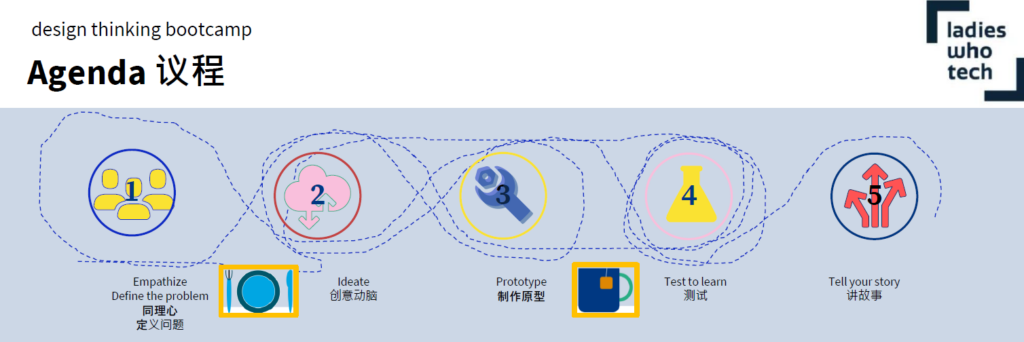
Empathize
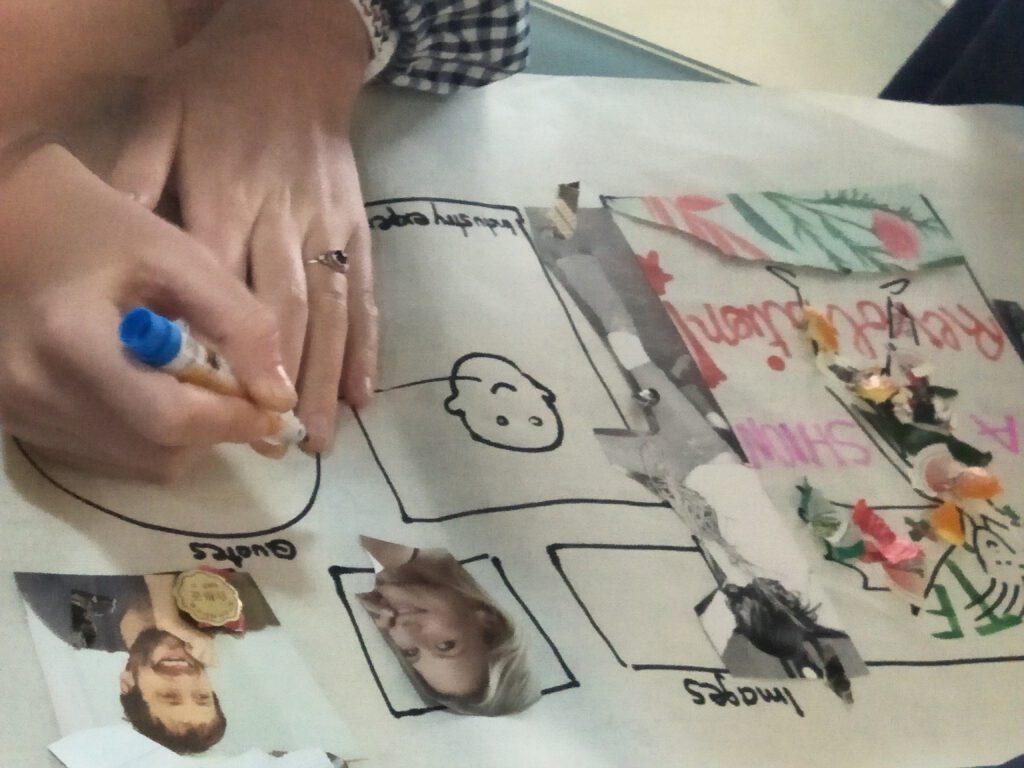
This is where every agile practice begins: stepping into someone else’s shoes. You take a real person and try to understand what she wants to achieve, what drives her, what shapes her days. In my consulting work with adults, I’ve learned to linger here longer than feels comfortable. Once you’ve truly connected with the person you’re designing for, everything else follows naturally.
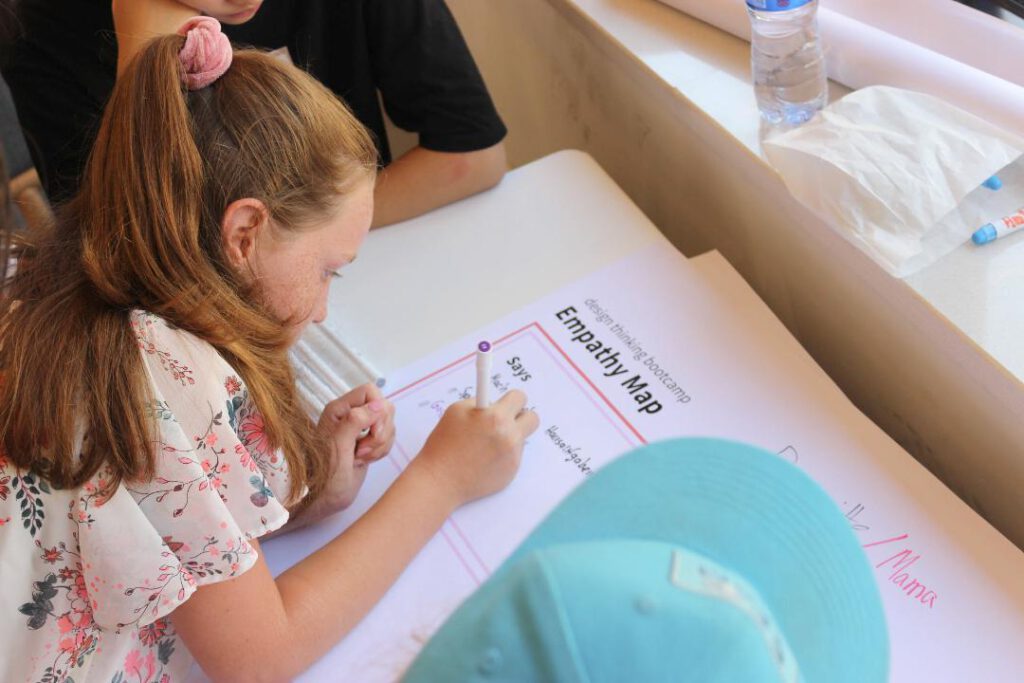
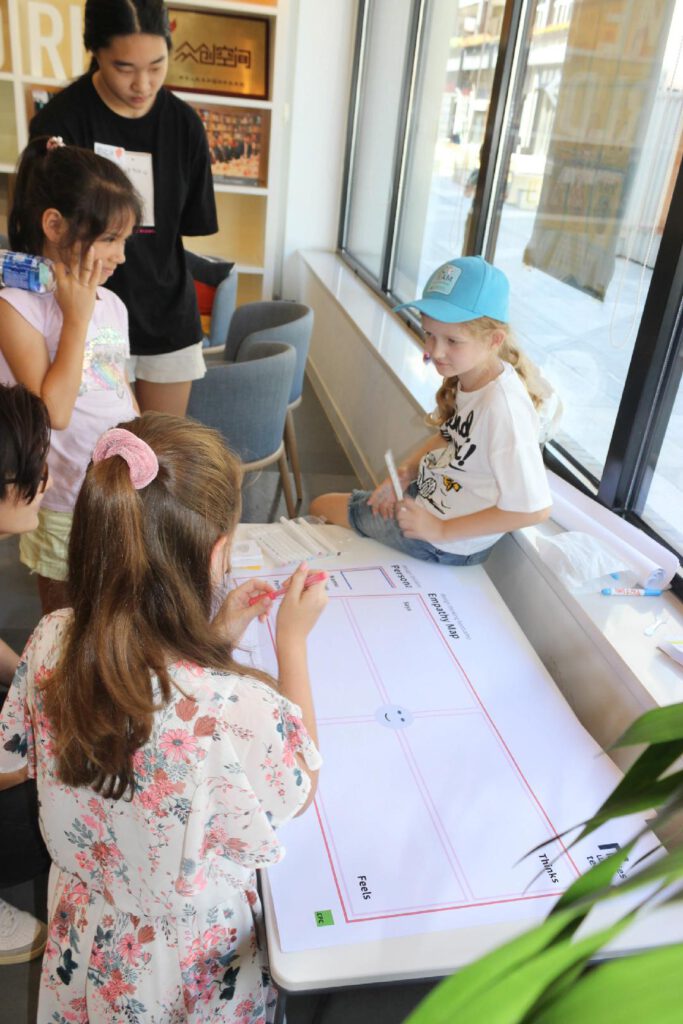
Kids discussing the content that should go into the Empathy Map
Define the problem
From everything you’ve gathered, you distill it down to a single headline — the challenge you’re going to work on.
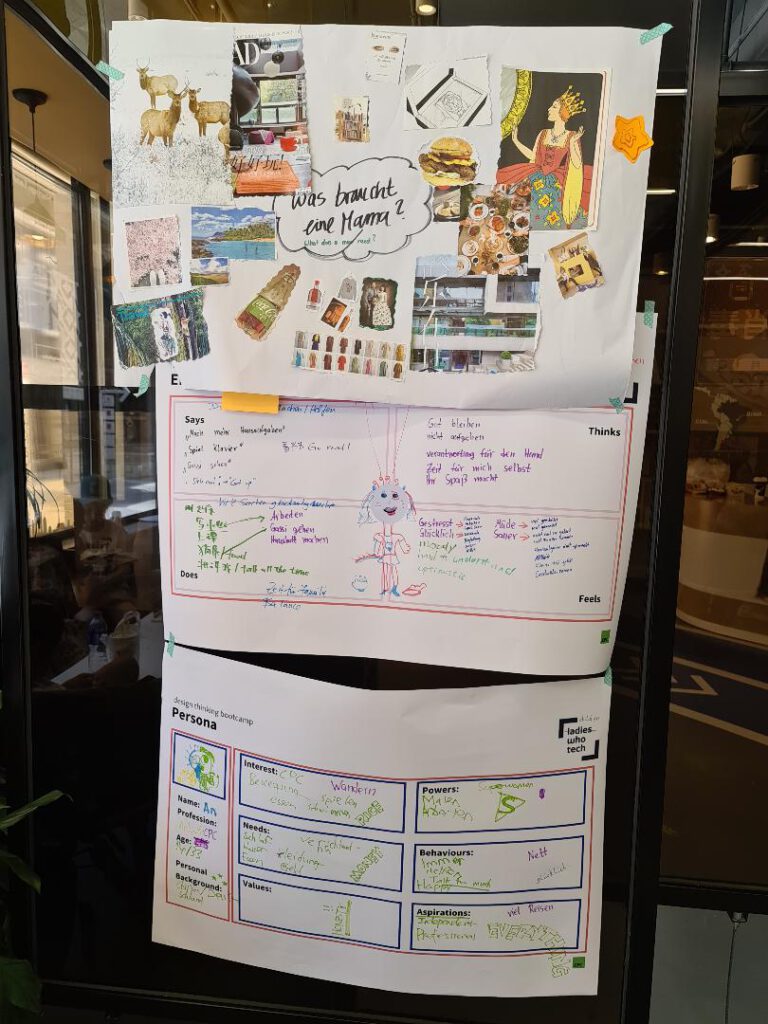
Ideate
Now you brainstorm. Generate as many solutions and product ideas as possible for the challenge you defined — quantity before quality.
Prototype
Move fast and build something rough. The prototype doesn’t need to be polished — it needs to exist. Getting an idea out of your head and into the real world is the only way to find out if it actually works. It also gives you something to show people, ideally the very person you designed it for, and get honest feedback.
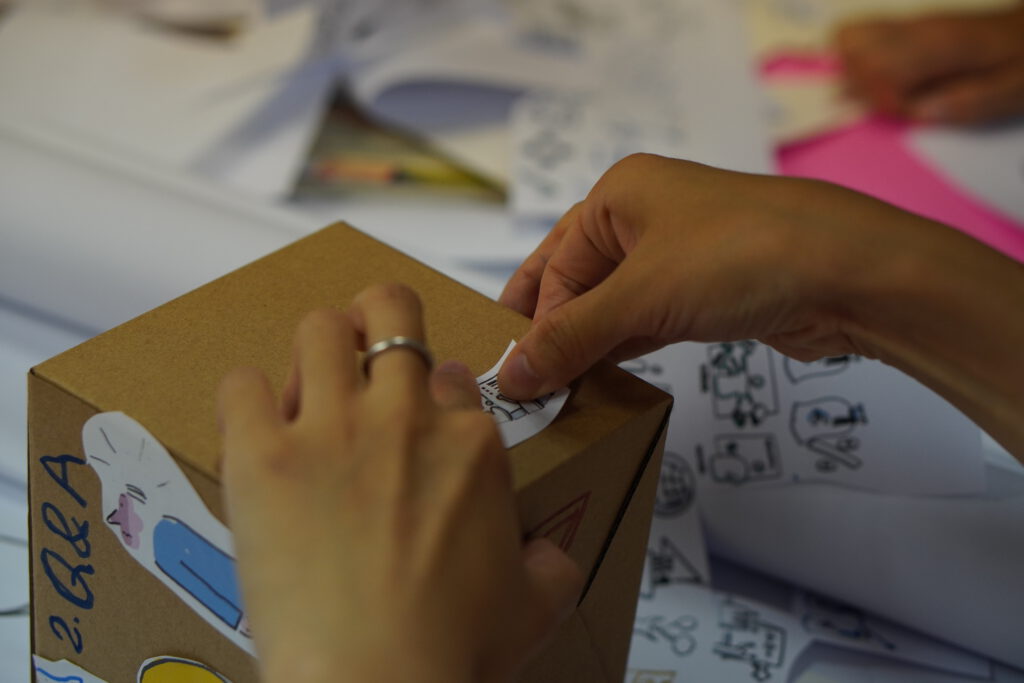
This is done in the following phase:
Test to learn
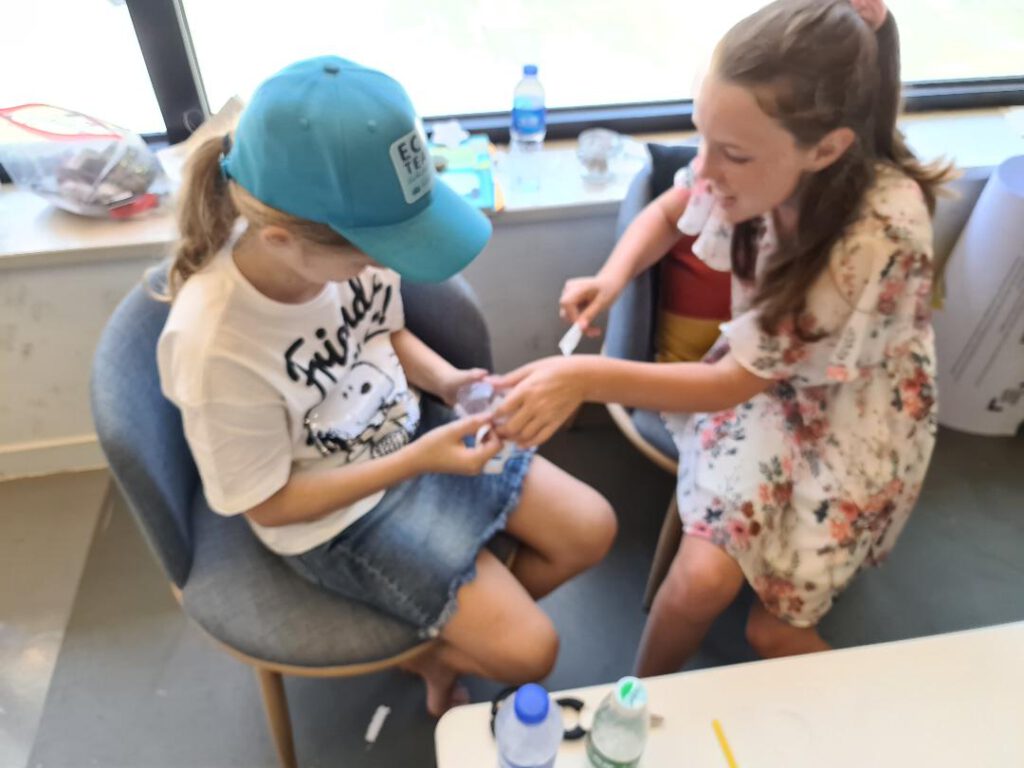
In my experience, this is the hardest step. After all that creativity and making — uplifting and exhausting in equal measure — showing the result to outsiders can be quietly sobering. A simple questionnaire is enough to surface the weaknesses you couldn’t see from the inside. It’s uncomfortable. It’s also exactly what Google means by “Get out of the f*cking office.”
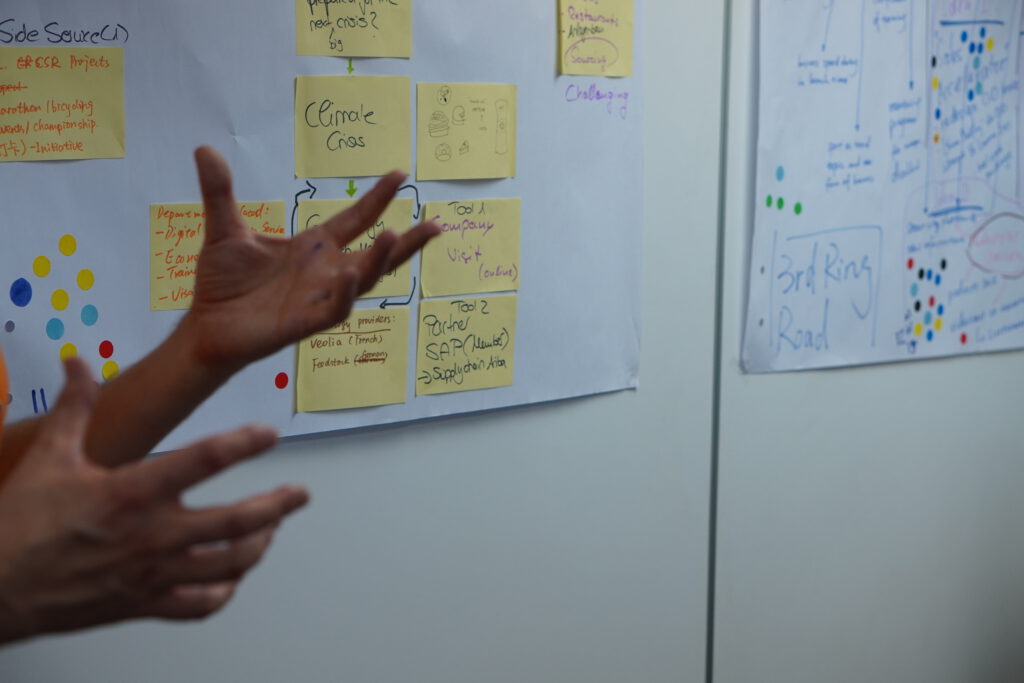
Tell your story
or a pitch wraps up the whole process.
How does this actually work?
Connect facts and feelings, logic and intuition
Design Thinking works because it wakes up parts of the brain that most of us have quietly stopped using. Adults spend their days in front of screens, one finger on a mouse. School kids aren’t doing much better. Here, we cut and glue and draw and craft. We flip through magazines, pull in what catches the eye, bring the physical world back into the thinking. Suddenly, decision-making capabilities that have been sitting idle start coming back online.
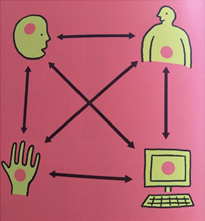
Make magic happen
The ultimate goal is the “What if?!” moment — that flash of possibility that can’t be manufactured, only stumbled into. To get there, you need total freedom. No fear of looking silly. No pressure to produce something immediately viable. Anything that chokes the flow of ideas is the enemy.
Playfulness — one of Design Thinking’s core ingredients — comes naturally to healthy children. Which is exactly why I was curious to see what would happen when kids worked with it deliberately.
My first experiment involved three primary school kids, one of them Antonia. Their task: write a story full of fantasy. First, define the main characters. Then describe them in as much detail as possible — what do they love doing, who are their friends, how do they dress? For inspiration, they could roam the house, browse magazines, or simply reach into their own imagination.
Try new agile practices with your kids before you try them with your clients. 😉
Brigitte
Next, they built out the story using post-it stickers and cut-outs from magazines — drawing, arranging, rearranging. Keeping everything loose and moveable was the point.
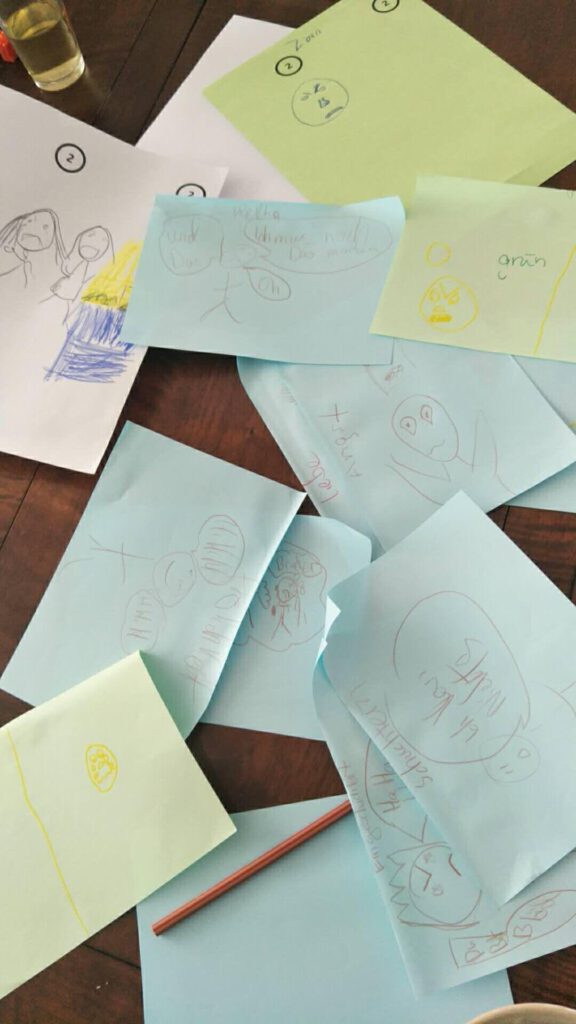
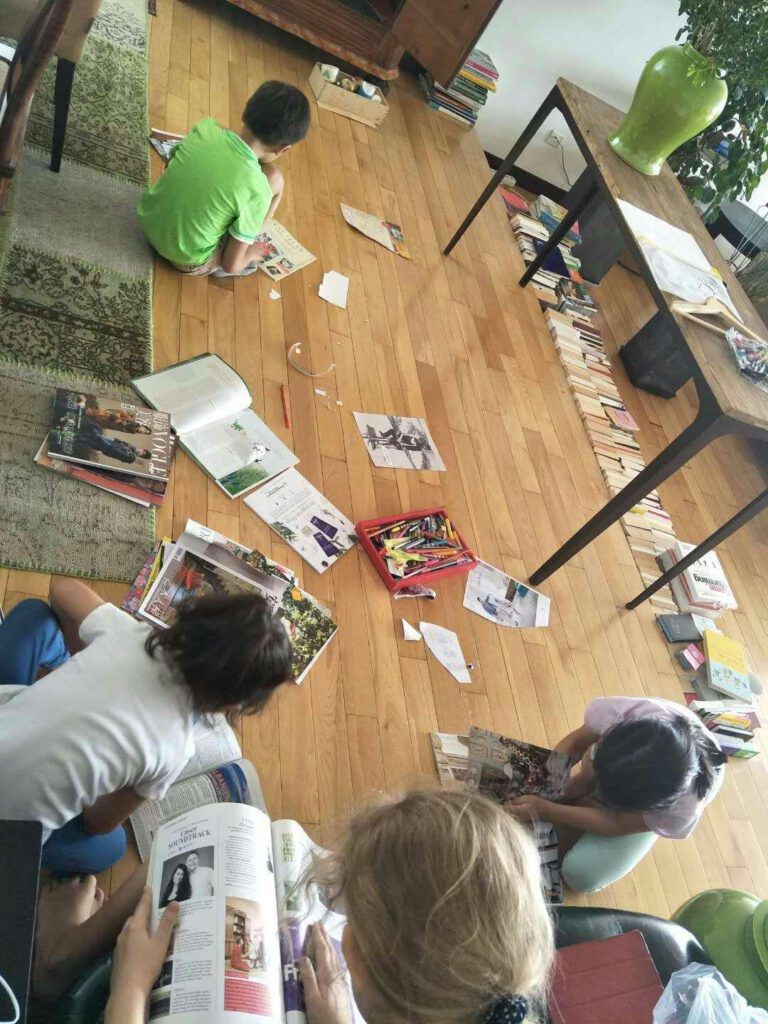
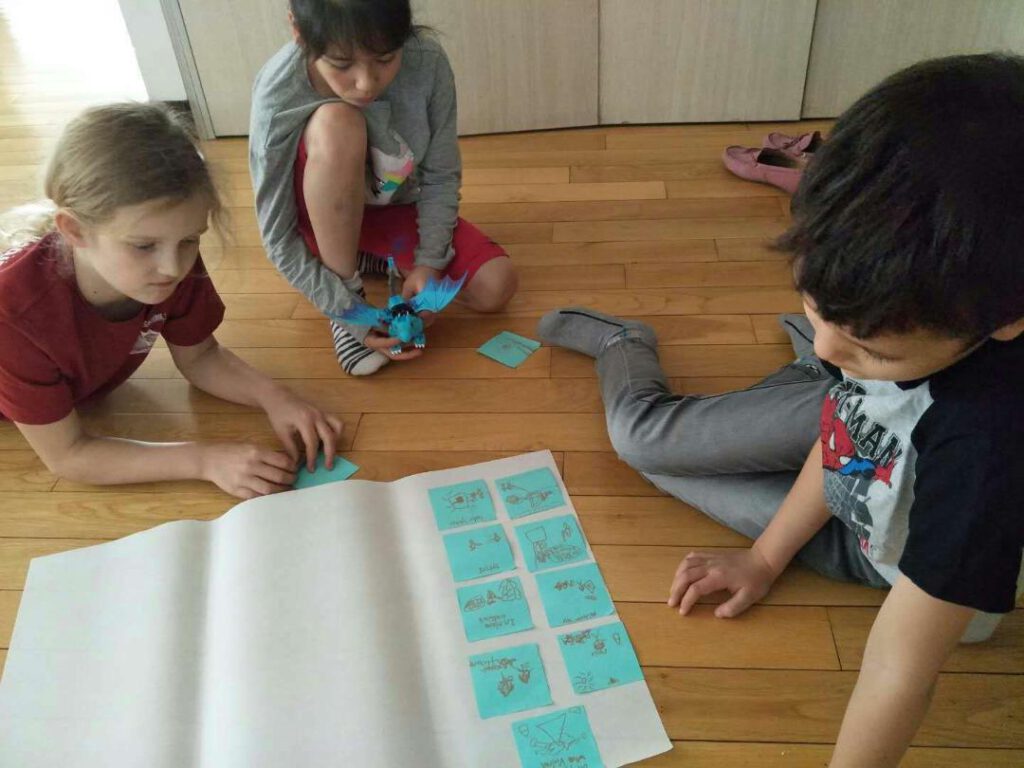
Once they’d settled on the problem and the resolution, the titles came next. Then a rework — refining the thread, adding details, tightening what needed tightening. Finally, it was time to present to the experts: each other. In the retelling, they discovered which parts landed, which lost the room, and where the logic fell apart — not that consistency was strictly the point, but it was noted.
And just like that, the stories started flowing.
Armed with everything they’d gathered, they started writing. And this was the part that stayed with me. The stories didn’t have to be coaxed out — they poured. All the content was already there, waiting. My daughter, who had refused to pick up a pen for weeks, wrote without hesitation. The anxiety was gone. The sentences just came.
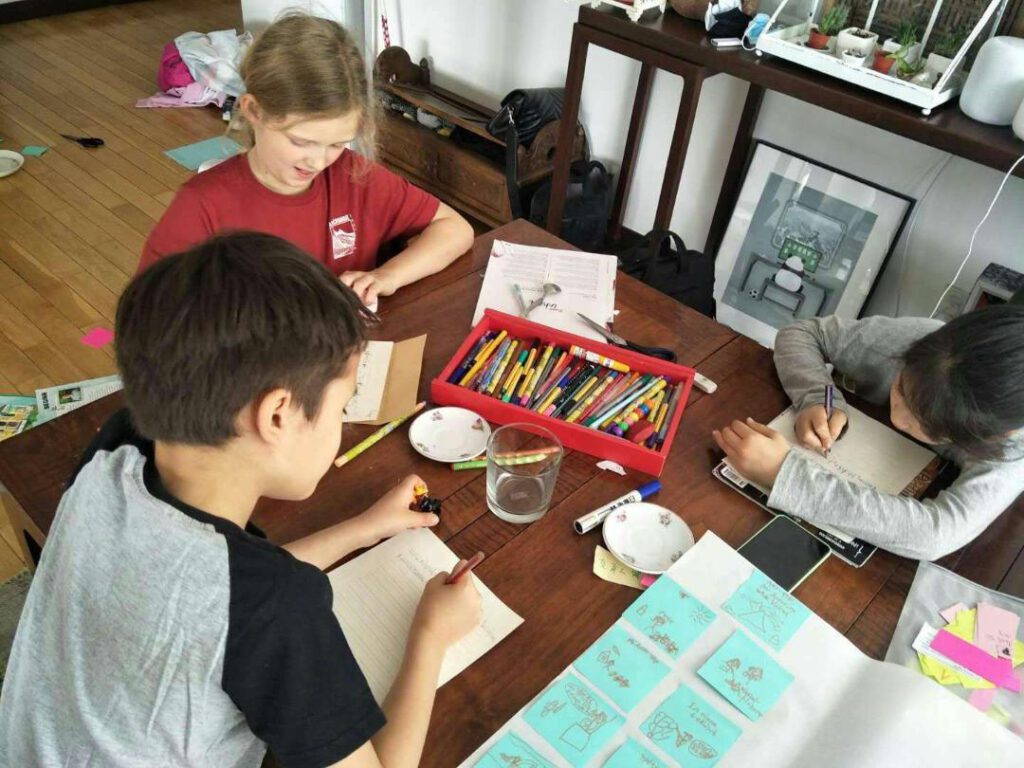
It’s the same effect I see in Design Thinking workshops with adults:
- For a long time, very little seems to be happening.
- The real work is going on inside — and then, suddenly, everything materialises at once. The process is intense. When it’s over, everyone is spent.
- And the results carry real emotion. You can feel it in them.
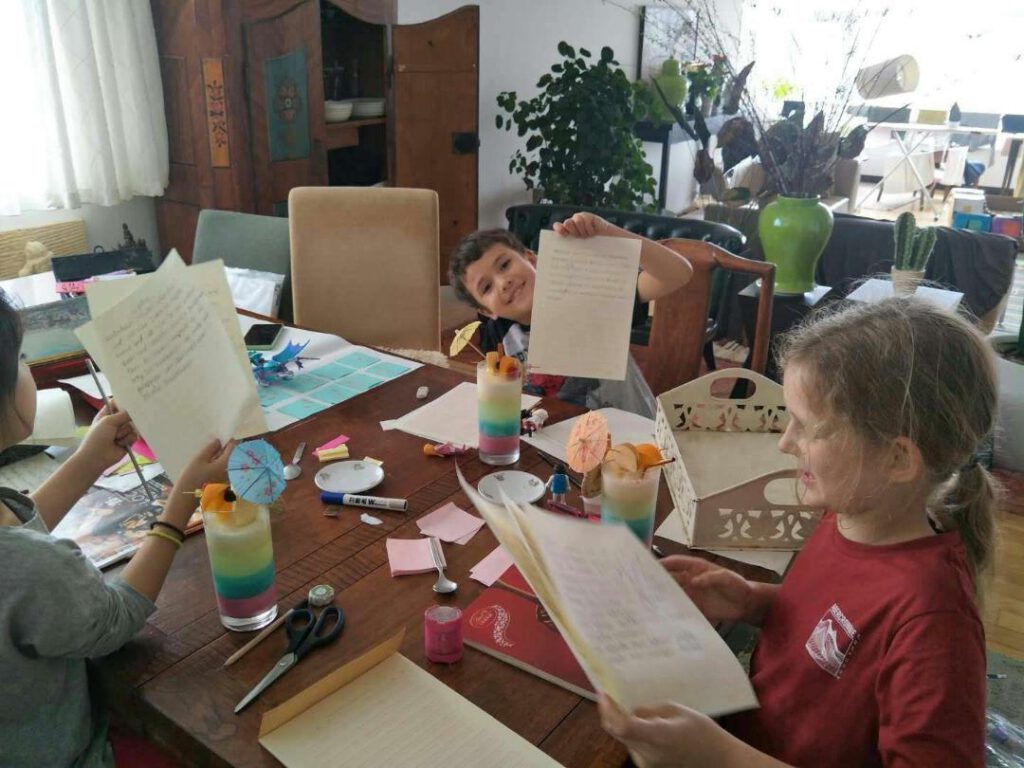
To close, the kids presented their stories. Most of them were genuinely, gloriously weird — which is exactly what happens when you tell children to go wild and pile on the fantasy.
That said, playfulness without direction only goes so far. Each child hit a wall at some point — a dip in concentration, a flicker of anxiety, a slide into unproductive patterns. I could have reached for more tools from my corporate Design Thinking toolkit: the Cover Story exercise, storyboard templates. But I held back, wary of stretching the session too thin and losing them. Three hours of intensive work felt like the outer limit of collective attention.
The morning ran its full course. Every single child stayed engaged — motivated, wide-eyed, and happily surrounded by creative chaos. That evening, messages started coming in from parents. The kids wanted to do it again.